Above Ponti, at the western end of the bay of Vasiliki, the road climbs uphill to Agios Petros. From there and through Komilios it turns and heads south to the villages of Dragano, Athani and the most beautiful and famous beaches of the island.
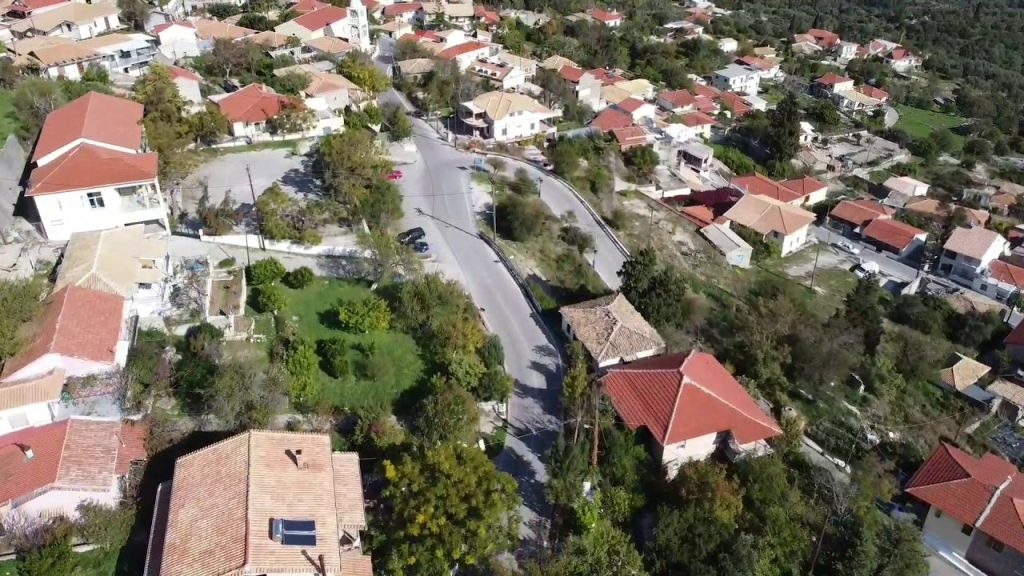
The village Saint Peter consists of a rural settlement in a beautiful location with an impressive view of the plain of Vasiliki and the ridge of Stavrotes, the highest mountain of the island. It takes its name from the homonymous church of Agios Petros, built in the 14th century. It is the largest village in the area and its inhabitants are engaged in agricultural farming.
The village church, Agios Athanasios, a spacious one-room church with a tiled roof is in the centre of the village. Its iconostasis, recently cleaned, looks particularly grand. It is in a simple neoclassical line with dominant colours, brown and gold. The icon of St. Athanasios, despotic, the work of Ioannis Voloudakis from 1914, stands with a strict expression, with colors and style influenced by the post-Byzantine Cretan tradition. Another beautiful church in the village is the Church of the Holy Apostles, with an iconostasis by Elias Menchikov from 1890. It is well crafted wood carving with imagination and art. Two meters from the west side of the church below ground level, there is the central area with a niche of an old temple, the Frangokliska. This is a Frankish-era manor house that still survives.
His little village Rupacia maintains its farmhouses in good condition. Simple, stone-built with tiled roofs, sturdy but lonely, they stand like guardians of another forgotten era, perched on a steep slope. Next to it is the waterfall of Roupakia with water that pours down in a rush, especially in the winter months. The whole area is of special beauty with rare species of flora, forest, gorge, running water and usable paths.