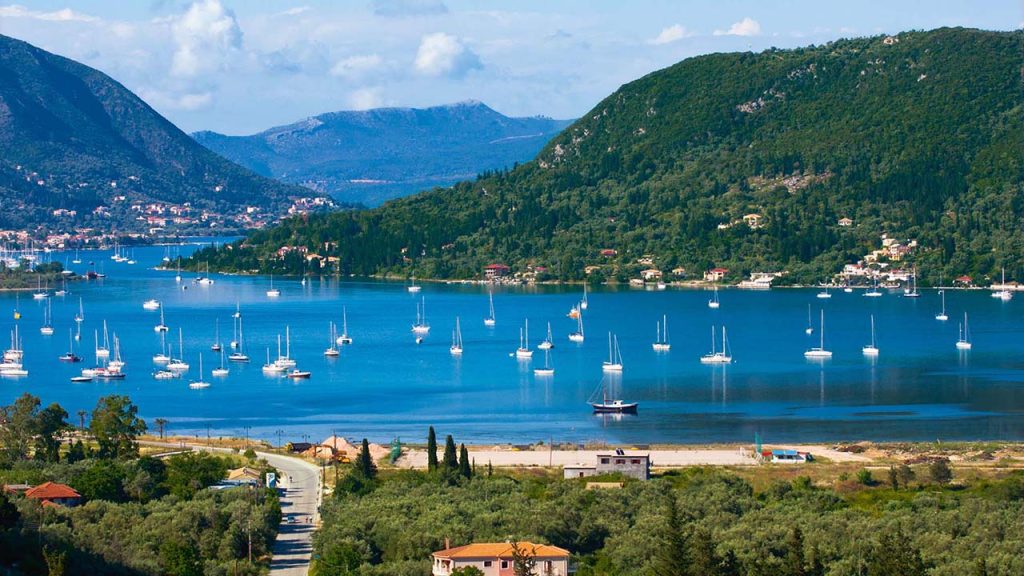
The name Vlicho comes from the 30 or so water gushing out of the mountain of Amalis at the foot of which it is built.
HISTORY
For 600 years Vlyho was a place that was inherited from one conqueror to another. During the years of the Turkish occupation 1479-1684 it belonged to the Turkish Pasades. During the Venetian years 1684-1789, it was divided among feudal lords who fought on the side of the Venetians against the Turks, such as the Chalampaioi, Machairaioi, Diplas, Kode Kavvadas, Valaoritai, etc.
In the following years they passed to similar ancestors of the English, the French, the Russo-Turks and the Greeks.
The regime of the conquerors from time to time always served the noble class because through them power was exercised more effectively towards the lower social classes.
The people who found themselves with property in Vlyho - as in Yeni - acquired nothing from donations. They bought this land with blood and sweat. First with his personal labour since he leased it from the lords and little by little he bought it.
Then with the remittances sent by the villagers from America. Until 1950, the tax collector of the Valaoritis family would return to the sea of Vlychos and Nidri and from whatever fish the boats had with them, he would take the «proportional» tax since the sea was Valaoritis'.
Vlyho seems to have been inhabited throughout the centuries by various conquerors. But as a village with a common consciousness, it began to take shape from 1850 onwards. Unflattering stories preserved in the archives of the Katochori police speak of the rivalry between the first two commercial shops that existed in Vlyho at that time and competed with each other in consumption.
As a village, Vlyho reached its peak from 1910 to 1940. At least ten large merchant ships of the time moved numerous goods to and from the island. Vlyho was the pulse of the construction industry of the whole island. The merchant Yannis Sklavenitis was considered one of the biggest merchants of Western Greece. Eventually everything faded away with the war of 1940.
Today - although significant works have been done in the area of logistical infrastructure - it seems that it is looking for the spark that will reignite the development in the area since Vlyho is a monument of natural beauty and an exquisite attraction.